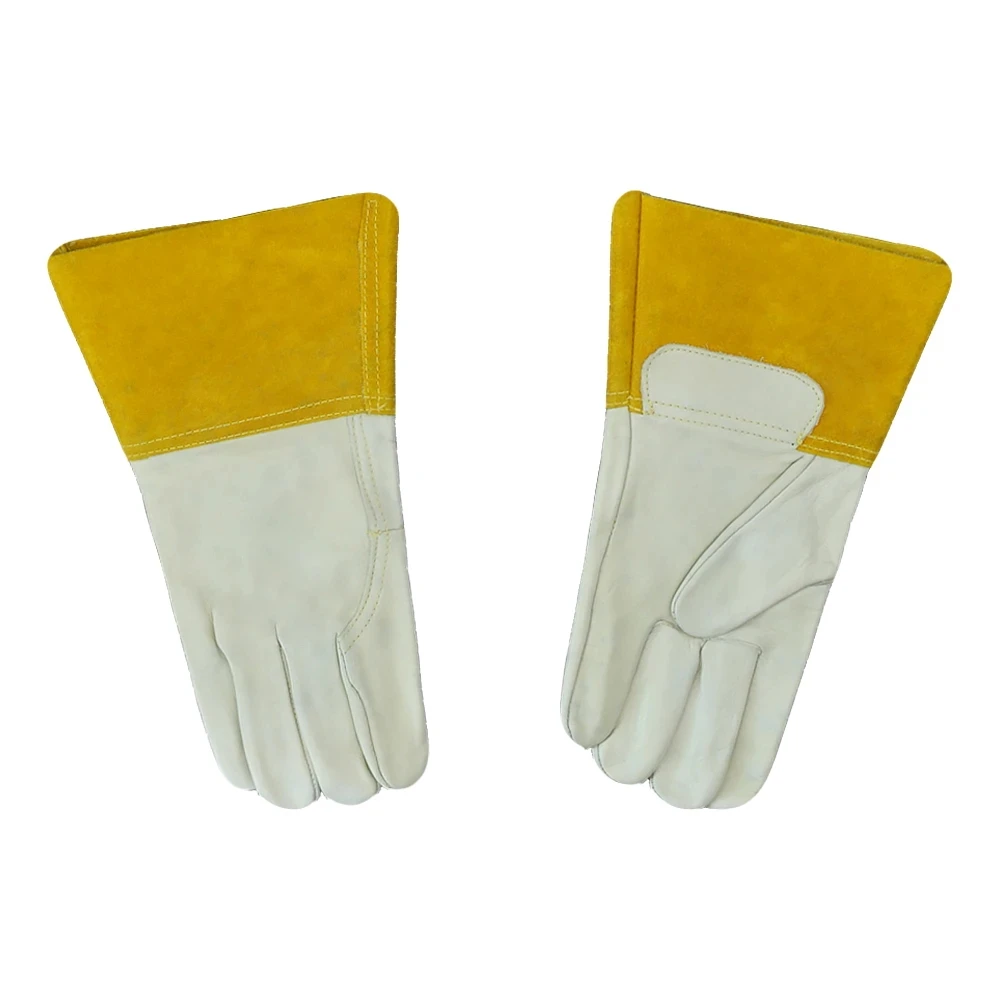
What Are Leather Farm Gloves
Leather farm gloves are designed specifically for the everyday demands of farming, gardening, landscaping, livestock work, and agricultural maintenance.
Unlike lightweight general-purpose gloves, leather designs are built to handle more demanding physical work. Depending on the application, they may feature a full leather construction or combine a leather palm with textile materials on the back of the hand.
This combination allows manufacturers to balance durability with flexibility and comfort.
Why Leather Is Popular for Farm Work
Farm workers rarely perform just one task during a working day. A worker might repair equipment in the morning, move materials at midday, and handle plants or tools later in the afternoon.
Leather is useful because it offers natural resistance to abrasion and provides a solid gripping surface. This makes it suitable for repeated handling of rough objects and hand tools.
For agricultural suppliers, leather gloves can also provide a practical product option for customers who prioritize durability over disposable glove designs.
Common Leather Choices
Different types of leather can create noticeably different glove characteristics.
Cowhide Leather
Cowhide is widely used for heavy-duty farm gloves because of its strength and abrasion resistance. It is suitable for material handling, equipment maintenance, fencing, and general agricultural work.
Goatskin Leather
Goatskin is naturally softer and more flexible. It can be a better choice when workers need more finger movement for detailed tasks.
Split Leather
Split leather can provide a cost-effective option for general farm work where durability is important, but the application does not require premium leather.
The right material depends on the work rather than simply choosing the thickest or most expensive leather.
Important Features for Agricultural Gloves
A good farm glove should reflect the way workers actually use their hands.
Depending on the application, useful features can include:
Reinforced palms
Strong stitching
Flexible fingers
Adjustable wrist closures
Extended cuffs
Breathable back panels
Multiple size options
For example, reinforced areas can help extend glove life where tools are frequently held, while flexible backs can improve comfort during repetitive movement.
Comfort Is More Important Than It Looks
Farm work often lasts for several hours. A glove that feels acceptable for ten minutes may become uncomfortable after half a working day.
Poor fit can cause pressure points, restrict finger movement, or make gripping tools more difficult. For this reason, sizing and construction should be considered alongside material selection.
A practical agricultural glove should protect the hands without making ordinary tasks harder.
Where Leather Farm Gloves Are Used
Leather farm gloves can be used across a broad range of applications.
Crop production: Useful for planting, harvesting, carrying materials, and handling agricultural tools.
Livestock operations: Suitable for general handling and maintenance tasks where durable hand protection is required.
Fencing and maintenance: Leather can help protect against abrasion from wood, wire, and rough surfaces.
Landscaping: Useful for handling branches, soil, tools, and outdoor materials.
Farm equipment maintenance: A durable glove can provide additional protection during general mechanical and maintenance work.
The correct glove should always be selected according to the specific hazards involved.
How Buyers Can Choose the Right Product
For importers, wholesalers, and agricultural suppliers, product selection should start with customer requirements.
Ask:
What type of farm work will the gloves be used for?
How much abrasion will the gloves experience?
Is flexibility important?
Will workers wear them for long periods?
What sizes and colors are required?
Is private-label packaging needed?
These questions help buyers avoid purchasing a product that looks suitable but performs poorly in actual working conditions.
OEM and Private Label Opportunities
Agricultural glove brands do not always need to rely on standard catalog products. OEM and ODM manufacturing can provide opportunities to customize the glove according to a specific market.
Customization may include leather selection, palm reinforcement, colors, logos, cuff construction, sizing, labels, and packaging.
For distributors, this can help create a more distinctive product line and target specific agricultural customers.
What Makes a Reliable Manufacturing Partner
For bulk buyers, the factory behind the product matters as much as the glove itself.
Material consistency, stitching quality, production capacity, inspection procedures, customization capability, and delivery reliability should all be considered before placing a large order.
Samples should also be tested in realistic working conditions. Feedback from actual users can reveal whether the glove provides the right balance of protection, grip, flexibility, and comfort.
Making a Practical Choice for Farm Work
Understanding What is Leather Farm Gloves is only the starting point. The more important question is whether the glove matches the real working environment.
A successful agricultural glove should provide useful protection without becoming unnecessarily bulky or uncomfortable. For buyers, the ideal product combines durability, practical design, consistent quality, and reasonable long-term value.
If you are sourcing agricultural gloves for wholesale distribution or developing your own private-label range, Contact Us to discuss your OEM and ODM requirements. Our team can help develop leather farm gloves around your target application, specifications, and market needs.