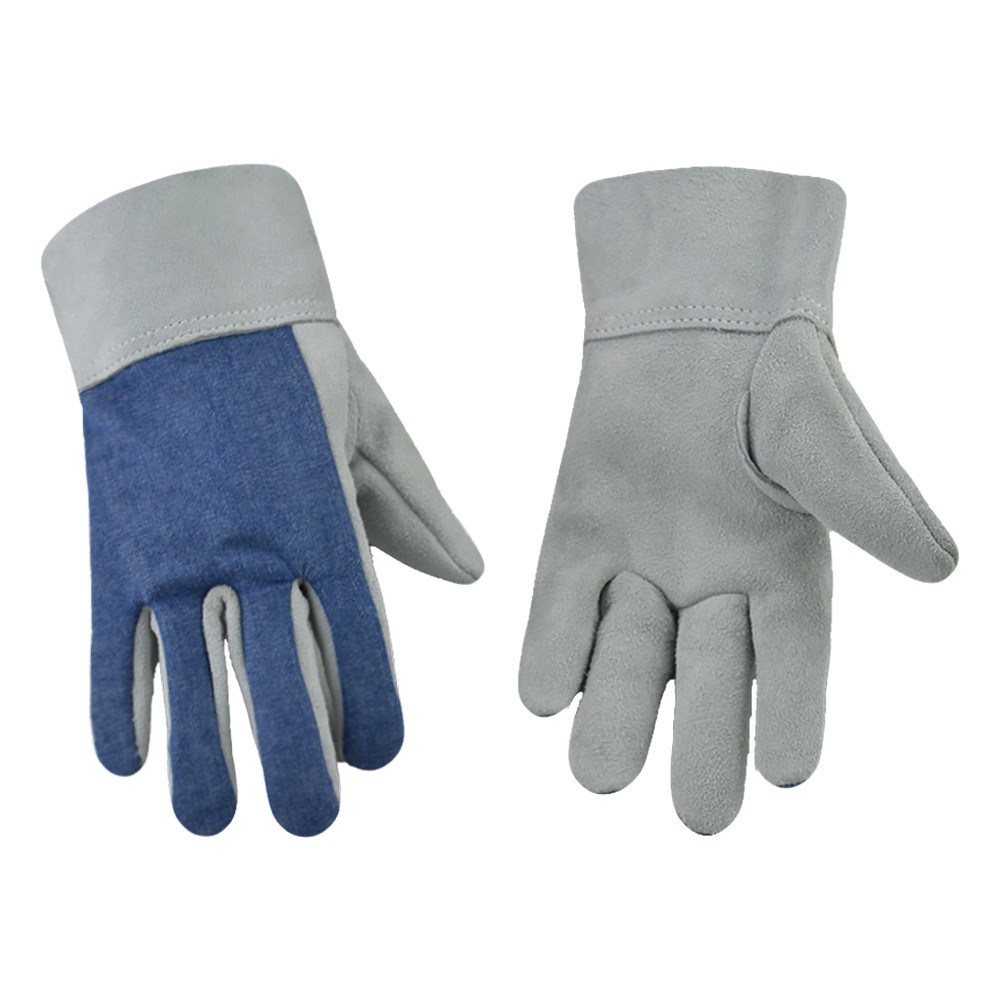
MATERIAL SELECTION: Premium leather has been carefully selected for its durability, flexibility and protective properties. Common leather types include cowhide, goatskin or pigskin.
Pattern Design: Skilled designers create precise patterns based on the shape of the hand, the length of the fingers, and the desired fit and dexterity of the glove. These patterns are usually made using CAD software or hand-drawn stencils.
Cutting: Cut the leather according to the pattern using a precision cutting tool or a die cutter. Care is taken to ensure precise cuts that preserve the integrity of the leather and allow for proper fit and flexibility.
Stitching: The cut pieces of leather are stitched together using a heavy-duty sewing machine. Often double stitched or reinforced stitching techniques are used to enhance durability and prevent the glove from unraveling under pressure.
Reinforcement: Additional layers of leather or specialized materials can be added to reinforce critical areas of the glove such as the palm, thumb and fingertips. This reinforcement enhances protection and extends the life of the glove.
Wrist Closure: Industrial leather work gloves often have a wrist closure mechanism such as elastic, hook and loop fasteners, or adjustable shoulder straps. This allows for a secure and customizable fit that prevents debris from entering the glove.
QUALITY CONTROL: Every pair of Industrial Leather Work Gloves goes through a strict quality control inspection. Check them for proper stitching, dimensional accuracy, reinforcement placement, and overall workmanship to ensure they meet the manufacturer's standards.
Uses and Applications of Industrial Leather Work Gloves:
Hand Protection: Industrial Leather Work Gloves are designed to provide hand protection for a variety of working environments. They are resistant to cuts, abrasions, punctures and impacts, making them suitable for tasks involving handling sharp objects, rough materials or heavy equipment.
Construction and Manufacturing: These gloves are commonly used in construction, manufacturing and industrial settings. They protect against hazards such as operating tools, using machinery, or moving heavy objects.
Welding and Heat Resistance: Some industrial leather work gloves are designed with additional heat-resistant properties, making them suitable for welding or tasks that involve exposure to heat or sparks.
Oil and Chemical Resistance: Certain leather work gloves are treated or coated to provide resistance to oils, chemicals, or other harmful substances. This makes them suitable for tasks that involve handling such substances.
General Maintenance and Repair: Industrial Leather Work Gloves are ideal for general maintenance and repair work. They provide hand protection when working with sharp or abrasive materials, performing mechanical maintenance or handling chemicals.