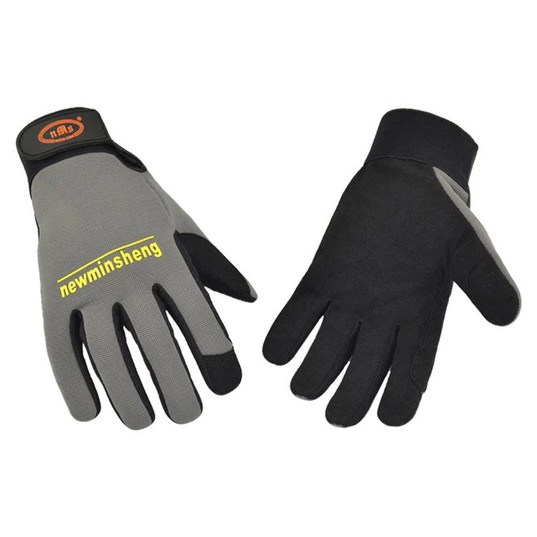
1. Durable and protective materials
Need to be resistant to wear, impact, oil and chemicals. Common materials include:
Synthetic leather or microfiber palm: It is lightweight and provides excellent grip and abrasion resistance.
Reinforced fingertips and joints: Additional padding or thermoplastic rubber)can protect the hands from cuts, scrapes, nd impacts.
And breathable back fabric spandex or mesh ensures comfort and can effectively prevent sweating during long working hours.
2. Enhanced grip and flexibility
When handling small nuts, bolts, and tools, a firm grip is essential. Features that improve grip include:
Silicone or textured palm: Provides a non-slip surface, even when working on oily parts.
Foam pad palm: It can effectively help absorb shock when using power tools and reduce hand fatigue.
Flexible design: Allows the hand to move easily without restricting the flexibility of the fingers.
3. Oil and Chemical Resistance
Since mechanics work in greasy environments, these gloves are often equipped with:
Oil-resistant coating: effectively protects hands from harsh chemicals, oils, and lubricants.
Waterproof material: effectively prevents absorption of liquids and keeps hands dry.
4. Touchscreen Compatibility
Modern mechanics need to use tablets, diagnostic tools, and touchscreens without removing their gloves. Many Velcro gloves now have the following features:
Conductive fingertips - allow mechanics to operate touchscreens without removing gloves.
5. Impact Protection for Heavy Duty Operations
For mechanics operating heavy equipment or performing high-intensity tasks, gloves should have the following features:
Knuckle guards - protect against hard surfaces and accidental impacts.
Padded fingers and palms - reduce vibration when using power tools.