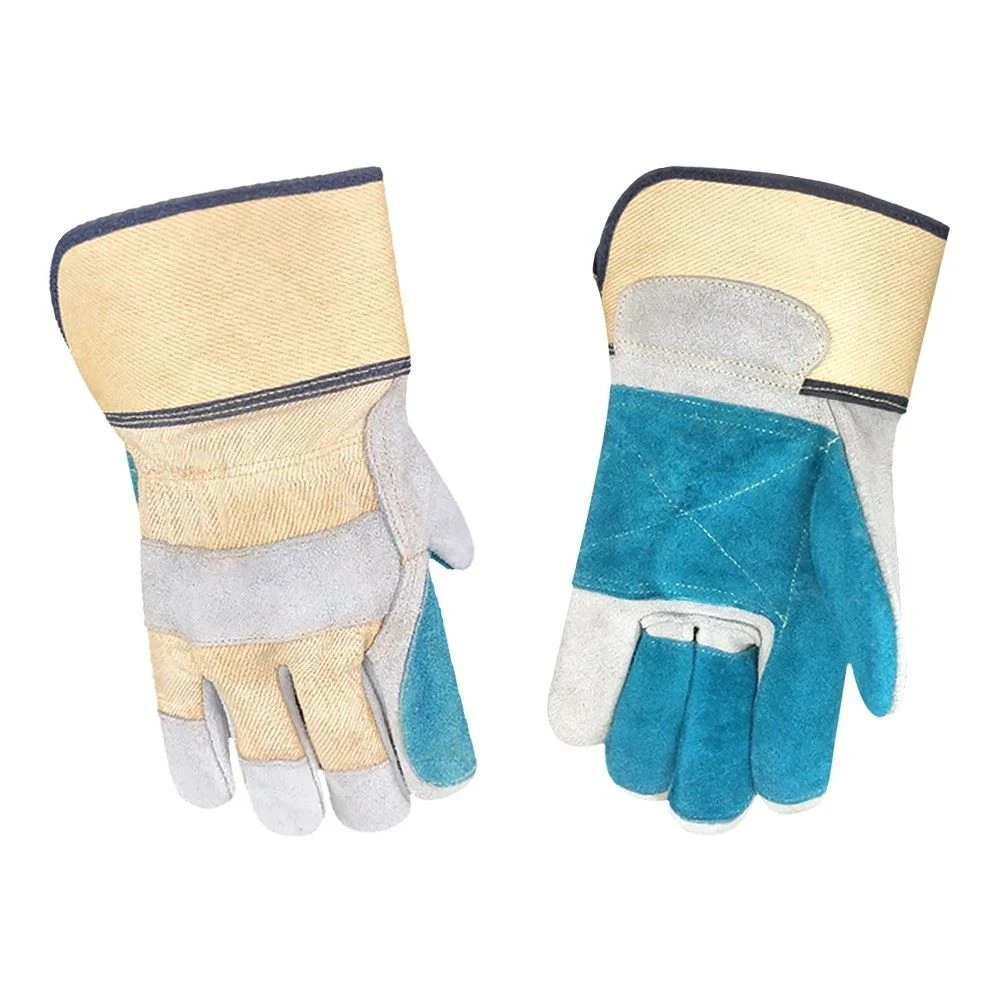
What Makes Full Grain Leather Different?
Full-grain leather comes from the outermost layer of the hide, retaining its natural grain rather than sanding it to remove imperfections. The surface may show natural marks, variations, and texture differences because the material hasn't been heavily corrected.
These characteristics are part of what distinguishes it from corrected grain and split leather.
One important feature is the natural fiber structure of the hide. When properly selected and processed, full grain leather can provide good strength and resistance to everyday wear. It can also develop a softer feel through use, depending on the leather type and finishing process.
However, full grain leather is not automatically the best choice for every application. Its thickness, flexibility, tanning, and construction all influence the finished glove.
Why Full Grain Leather Is Worth Considering for Work Gloves
The appeal of full grain leather is not simply its appearance. Its natural surface and material structure make it suitable for selected applications where durability and a substantial leather feel are important.
Natural surface characteristics
Because the grain layer remains intact, the leather retains its natural surface texture. This gives each batch a degree of variation that buyers should understand when establishing product appearance standards.
Resistance to everyday abrasion
Well-selected full-grain leather can perform well in applications involving repeated contact with tools, equipment, and rough materials. Actual abrasion performance depends on leather quality, thickness, and working conditions.
A balance of strength and flexibility
Leather selection involves a trade-off. Very thick material may provide a substantial feel but can restrict hand movement. A suitable thickness should allow workers to grip tools without excessive stiffness.
Long-term appearance
Full grain leather often develops changes in color and surface character through use. For some work glove ranges, this natural aging is an attractive material feature rather than a defect.
Which Jobs Are Suitable for Full Grain Leather Gloves?
The right application depends on the leather specification and complete glove design. Full grain leather can be considered for several types of work.
Construction and Building Maintenance
Construction workers regularly handle timber, tools, building materials, and equipment. Gloves made with suitable full-grain leather can provide a durable contact surface for general handling tasks.
For this market, buyers may consider reinforced palms, secure cuffs, and practical sizing. If workers handle sharp materials, the glove must have an appropriate tested cut-protection rating rather than relying on leather alone.
Agricultural and Outdoor Work
Farm workers and outdoor maintenance teams frequently grip tools, move materials, and perform repetitive manual tasks. Leather gloves can be developed for these activities with attention to flexibility, cuff design, and resistance to everyday wear.
The leather treatment should also be considered when the gloves may encounter moisture or changing outdoor conditions. Full grain leather should not automatically be described as waterproof.
Equipment Handling and Industrial Maintenance
Workers handling machinery components and industrial tools need gloves that fit securely and allow controlled movement. Full grain leather may be suitable for applications where material durability is important, provided the glove does not become too stiff for the task.
General Material Handling
For businesses supplying warehouses, workshops, and industrial customers, full grain leather gloves can be considered for selected handling applications. The final specification should reflect the materials being handled and the expected frequency of use.
Full Grain Leather and Other Leather Types
When developing a glove range, buyers should understand how full grain leather compares with other commonly used materials.
Full grain leather: Retains the natural grain surface and is often selected for products where material quality and durability are priorities.
Top grain leather: Uses the upper hide layer but may have its surface corrected or finished differently. It can offer a more uniform appearance.
Split leather: Comes from the lower layers of the hide and is commonly used in work gloves where cost and application-specific construction are important.
Synthetic leather: Offers more control over surface texture, color, and consistency, making it useful for certain glove designs.
There is no universal winner. A distributor serving heavy construction customers may have different requirements from a brand selling flexible gloves for equipment maintenance.
What Determines the Quality of a Finished Glove?
Even high-quality leather cannot compensate for poor glove construction. Buyers should pay close attention to the details that influence comfort and service life.
Leather thickness and consistency
Check whether the leather thickness is appropriate for the intended application. Significant variations between panels can affect the glove's fit and overall appearance.
Cutting and panel arrangement
The direction and placement of leather panels can influence how the glove bends and how much stress is placed on individual seams. Good pattern development helps reduce unnecessary tension during hand movement.
Stitching quality
Inspect the seams around the fingers, thumb, palm, and cuff. Uneven stitching, loose threads, or poorly aligned panels can become weak points during regular use.
Palm and thumb construction
These areas often experience repeated pressure and friction. Depending on the application, additional leather reinforcement may help extend the glove's useful life.
Fit and comfort
A glove that is too tight may place excessive tension on seams, while an oversized glove can reduce control. Sample testing should include gripping tools, picking up objects, and repeated hand movements.
How Wholesale Buyers Can Evaluate Samples
Before placing a bulk order, procurement teams should test samples under conditions that resemble the intended application.
Rather than checking only the appearance of the leather, consider the following:
Compare the leather surface, thickness, and flexibility across several samples.
Check whether the palm and fingertips provide enough material coverage.
Wear the gloves while performing typical working movements.
Inspect stitching and panel connections after repeated use.
Confirm that the size chart matches the actual finished product.
Request relevant test documentation if specific protection standards are required.
For private-label brands, it is also useful to establish acceptable standards for natural leather variation. Since genuine leather is not a completely uniform material, defining appearance expectations before production can prevent disagreements during bulk inspection.
Developing Custom Full Grain Leather Work Gloves
Different markets may require different glove designs, even when they use the same leather material. A construction distributor may prefer a heavier palm, while an industrial supplier may prioritize finger flexibility and a closer fit.
OEM and ODM manufacturing can accommodate a range of requirements, including:
Full-grain leather selection and thickness.
Different palm and back-of-hand materials.
Reinforced thumbs, palms, and fingertips.
Custom colors and size ranges.
Elastic cuffs or adjustable wrist closures.
Printed logos, embroidery, or custom leather patches.
Private-label labels, hangtags, and packaging.
For successful product development, buyers should first identify the target application, expected performance, and market price range. The manufacturer can then help evaluate suitable material and construction options before sample approval.
Working with an Experienced Leather Glove Manufacturer
Consistent production requires more than sourcing good leather. Material inspection, cutting accuracy, sewing quality, finished-product checks, and packaging all contribute to the final result.
LUQI has around 30 years of glove manufacturing experience, supplying leather work gloves, work safety gloves, welding gloves, mechanic gloves, driving gloves, and other specialized glove categories. With manufacturing facilities in China and Ethiopia, LUQI supports OEM and ODM projects for wholesalers, importers, distributors, and private-label brands.
Customers can discuss leather specifications, glove construction, branding, sizing, and packaging according to their product requirements.
Final Thoughts
Full grain leather offers distinctive material characteristics that make it worth considering for selected work glove applications. However, the quality of the finished product depends on more than the leather grade. Thickness, flexibility, panel arrangement, stitching, and fit all influence how the glove performs in daily use.
For businesses sourcing Full Grain Leather Work Gloves, the best purchasing decision comes from matching the material to the working conditions and evaluating the finished product through practical sample testing.
Contact LUQI to discuss your custom leather glove requirements, OEM and ODM manufacturing options, and wholesale pricing.