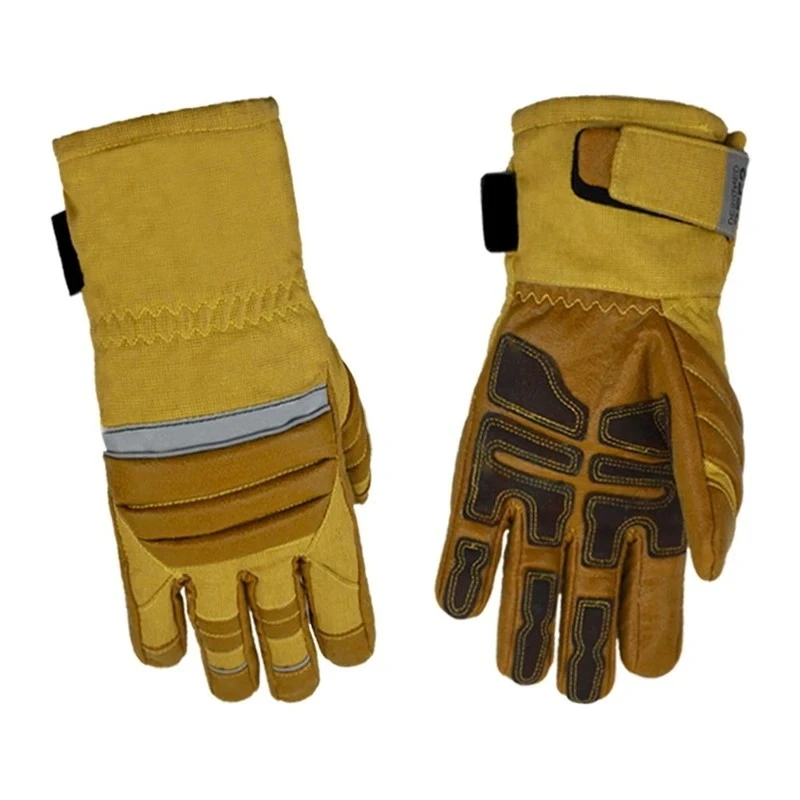
What Makes Extrication Gloves Different from Ordinary Work Gloves?
Extrication work involves a combination of demanding hand movements and unpredictable contact with surrounding materials. Responders may need to operate rescue tools, handle vehicle components, move debris, secure equipment, or assist injured people.
Ordinary work gloves may provide basic abrasion protection, but they are not necessarily designed for these specific situations.
A well-designed extrication glove should balance several considerations:
Abrasion resistance: Helps withstand repeated contact with rough surfaces and equipment.
Cut and puncture protection: The required protection level depends on the glove construction and verified test results.
Grip performance: Supports more controlled handling of tools and equipment.
Finger mobility: Allows responders to perform detailed tasks without excessive restriction.
Secure wrist closure: Helps keep the glove properly positioned during demanding movements.
Comfort and breathability: Reduces discomfort during extended operations.
No single material or construction can solve every challenge. The right combination depends on the intended rescue environment and the level of protection required.
The Materials Behind a Reliable Rescue Glove
Material selection directly affects how an extrication glove performs. Manufacturers need to consider not only the material itself but also how different components work together.
Synthetic leather and reinforced palm materials
Synthetic leather is commonly considered for the palm because it can offer a practical balance of flexibility, grip, and abrasion resistance. Different surface textures can also be used to improve contact with tools and equipment.
Stretch fabrics for the back of the hand.
Flexible textile materials can help improve movement around the fingers and knuckles. Breathable fabrics may also support comfort during extended use, particularly when responders need to wear gloves for long periods.
Protective reinforcement
Additional reinforcement can be incorporated into high-contact areas, such as the palm, fingertips, and knuckles. However, reinforcement should be positioned carefully. Excessive thickness may reduce flexibility and make it harder to handle small components.
Impact protection components
Some designs incorporate protective padding or molded components over exposed areas. Their effectiveness depends on the design and relevant test results, so buyers should confirm the intended protection level rather than relying on appearance alone.
Why Fit and Dexterity Matter During Vehicle Extrication
One of the most overlooked aspects of rescue glove selection is finger mobility.
During vehicle extrication, responders may need to reach into narrow spaces, adjust straps, operate hand tools, or manipulate small equipment. A glove that feels protective but restricts finger movement can make these tasks more difficult.
For this reason, buyers should evaluate more than the general size of the glove.
Important details include:
Finger length and width.
Palm shape and overall fit.
Flexibility around the thumb and index finger.
Stitching placement in areas that frequently bend.
Wrist opening and closure adjustment.
A useful sample evaluation is to ask users to perform several realistic tasks while wearing the gloves. These might include gripping a rescue tool, fastening a buckle, picking up small objects, and opening or closing the hand repeatedly.
If the glove performs well only when the hand is stationary, its design may need further adjustment.
Selecting the Right Extrication Gloves for Different Rescue Applications
Not every rescue operation creates the same demands. Procurement teams should identify the main working conditions before choosing a glove specification.
Vehicle accident rescue
Vehicle extrication can involve sharp edges, damaged glass, metal components, and heavy tools. Palm reinforcement, suitable abrasion resistance, and verified cut protection may be important considerations.
Fire and emergency response
Fire and emergency response teams may need gloves that support frequent handling of equipment and movement between different tasks. Fit, grip, and compatibility with other protective equipment should be assessed.
Technical rescue and debris handling
Rescue operations involving damaged structures or debris may require additional attention to abrasion, puncture hazards, and the glove's overall construction. The required protection should be determined by a task-specific risk assessment.
The important point is that a glove designed for general mechanical handling should not automatically be treated as suitable for every rescue application. Buyers should match the product's verified performance to the hazards identified by the end user.
What Should Buyers Check Before Placing a Bulk Order?
For distributors, wholesalers, and emergency equipment suppliers, approving a sample is an essential step before committing to a large order.
A practical evaluation should cover the following areas:
Construction consistency: Check whether stitching, reinforcement, and material placement are consistent across samples.
Grip under realistic conditions: Test the palm material with the tools and equipment users are expected to handle.
Fit across size ranges: Confirm that the size chart reflects actual hand measurements.
Movement and comfort: Evaluate finger flexibility and wrist adjustment during repeated tasks.
Protection documentation: Request applicable test reports and confirm that the product meets the required standards.
Production repeatability: Make sure the approved sample can be reproduced consistently in bulk production.
Buyers should also consider replacement requirements. A glove that is difficult to source in consistent sizes or specifications may create unnecessary challenges for departments managing large teams.
Customization Opportunities for Private Label Extrication Gloves
Different rescue equipment brands may have different requirements for materials, appearance, sizing, and product positioning. This creates opportunities for OEM and ODM manufacturing.
A professional glove manufacturer can work with buyers to develop specifications around:
Palm material and grip texture.
Reinforced palm, fingertips, and knuckle areas.
Back-of-hand fabric and protective components.
Color combinations and size ranges.
Adjustable wrist closures.
Printed logos, embroidered branding, or rubber patches.
Custom labels, hangtags, and retail packaging.
For buyers developing their own Mechanix Extrication Gloves product category, it is important to establish the intended application and performance requirements before finalizing the design. Customization should improve the glove's suitability for its users rather than simply change its appearance.
Working with an Experienced Glove Manufacturer
Developing reliable extrication gloves requires coordination between material selection, pattern design, sample testing, and production quality control. A manufacturer should be able to discuss these details clearly and explain which design options are practical for the intended application.
LUQI has around 30 years of experience in glove manufacturing, supplying work safety, leather, mechanic, welding, outdoor, and other specialized glove categories. With manufacturing facilities in China and Ethiopia, LUQI supports OEM and ODM projects for wholesalers, distributors, and private-label brands.
From material selection and logo application to packaging development, the manufacturing process can be adjusted according to project requirements. Buyers can discuss their target market, expected order volume, and technical specifications before moving to sample development.
Final Thoughts
Choosing extrication gloves is ultimately about finding the right balance between protection, control, comfort, and practical usability. A glove that looks rugged may not necessarily perform well during detailed rescue tasks, while a highly reinforced design may create unnecessary restrictions if flexibility has not been considered.
For professional buyers, the best approach is to define the hazards, evaluate samples under realistic working conditions, and confirm that the finished product meets the required performance standards.
Contact LUQI to discuss customized extrication glove development, OEM manufacturing, and wholesale supply. Request a quotation for your next glove project.